What to Post When Building in Public on LinkedIn
A build-in-public content strategy for LinkedIn: the six kinds of posts that work, why the honest version beats the polished one, and how to keep it going.

You know you should be building in public. Every founder you admire seems to do it: sharing their numbers, their lessons, their messy middle, and somehow turning it into inbound, hires, and a following. If you want the wider strategy around these post types, where the share-versus-private line sits and how to run it every week, our build-in-public content playbook is the companion to this piece.
Then you sit down to post, and your mind goes blank. What do you even share? Everything feels either too polished to be interesting or too private to publish.
That blank page is the whole problem, and it is solvable. Building in public means sharing the real, in-progress story of building your company, the wins, the numbers, the failures, and the decisions, as it happens, rather than only announcing the polished result. This is the practical build-in-public content strategy: the six things that actually work on LinkedIn, why the honest version wins, and how to keep it going past week two.
Why building in public beats the polished post
The instinct is to wait until something is finished and impressive, then post a clean announcement. That instinct is exactly backwards.
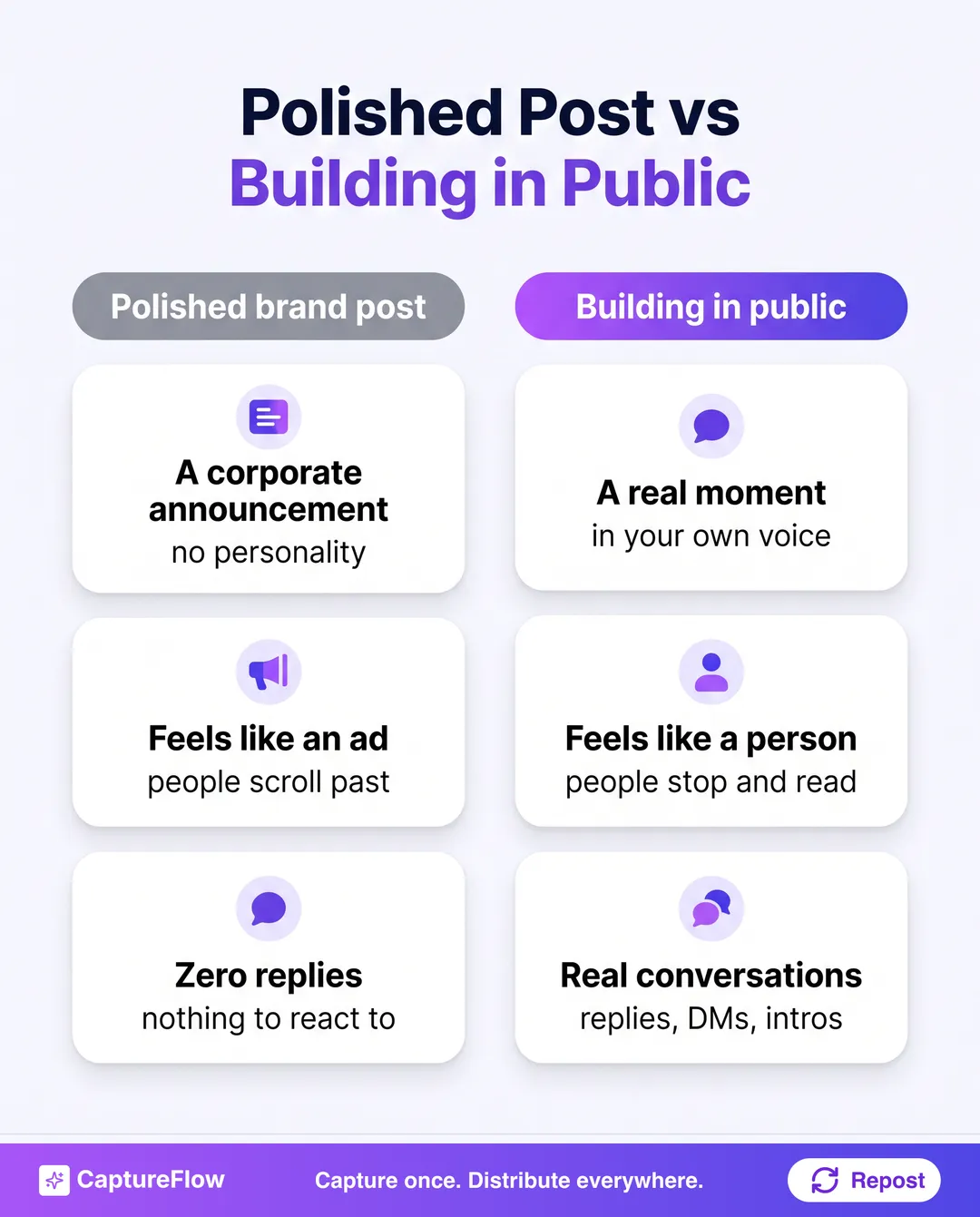 Same founder, two posts. The honest one is the one people actually reply to.
A polished announcement reads like an ad, and people scroll past ads. A build-in-public post reads like a person thinking out loud, and people stop for a person. The difference is not writing quality, it is that one invites a reaction and the other performs.
There is real trust behind this. In the 2024 Edelman-LinkedIn B2B Thought Leadership Report, 73 percent of decision-makers said an organization's thought-leadership content is a more trustworthy basis for judging it than its marketing. Sharing your real process is thought leadership without the suit on. It is also just the honest version of founder-led marketing: your credibility, pointed at what you are building.
The 6 things to post when building in public
You are not short on material. Building a company generates postable moments daily. Here are the six categories that reliably work.
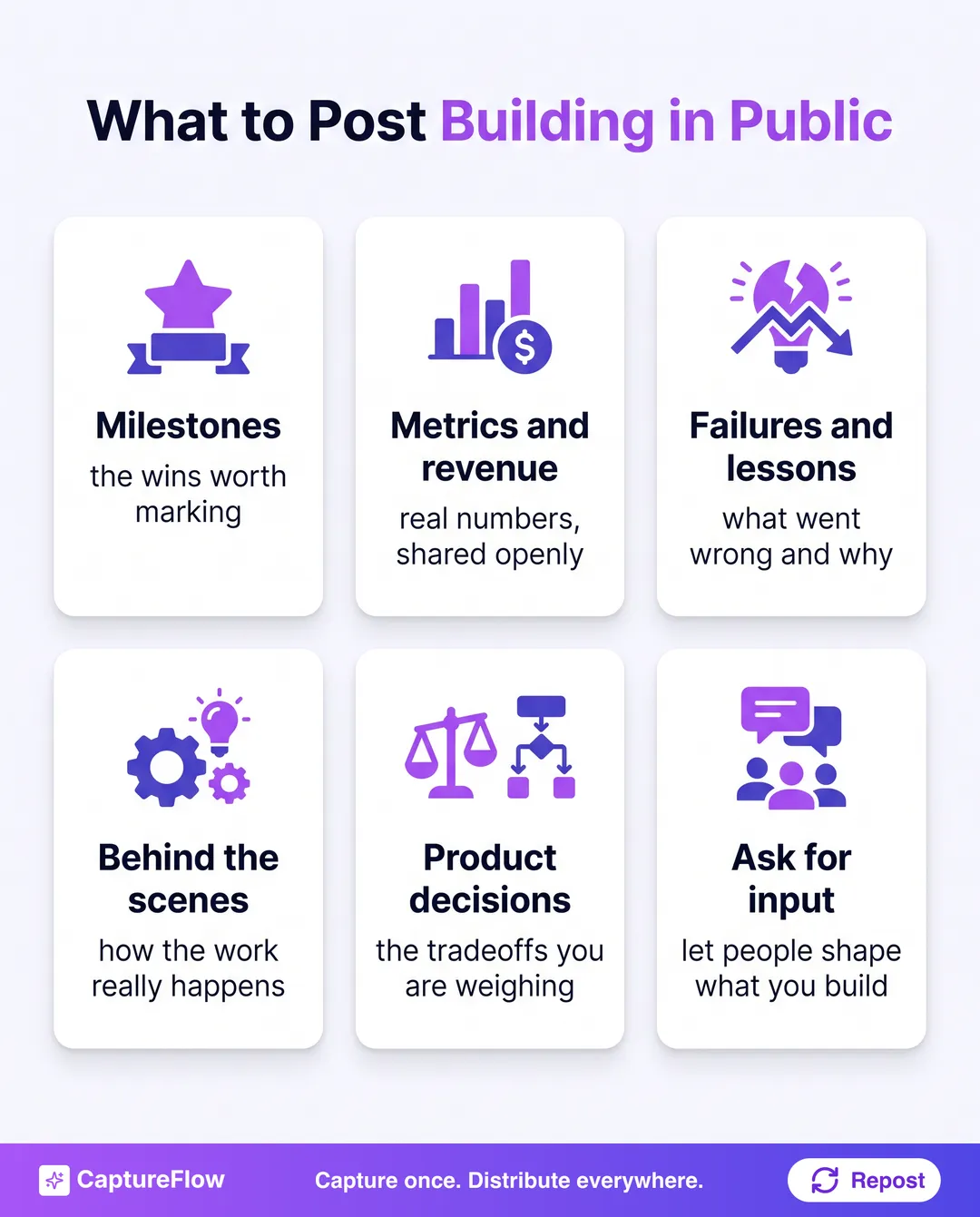 Six wells you can draw from every week. You already have all of them.
1. Milestones
The wins worth marking: first customer, a revenue number, a launch, a hire. Do not just state it, share what it took. The struggle behind the milestone is the part people connect with.
2. Metrics and revenue
Real numbers, shared openly. MRR, churn, a growth chart, a hard month. Specificity is the whole appeal. "We hit $12k MRR and here is what moved it" beats "growth is going well" every time.
3. Failures and lessons
What went wrong and why. A launch that flopped, a hire that did not work, a bet that missed. Failure posts are the most trusted content you can publish, because nobody fakes them.
4. Behind the scenes
How the work actually happens: your process, your stack, a day in the build, the unglamorous middle. It humanizes the company and quietly demonstrates competence.
5. Product decisions
The tradeoffs you are weighing out loud: what to build next, what to cut, why you chose one path. It pulls people into the thinking, and the comments often make the decision better.
6. Ask for input
Let people shape what you build. A genuine question, a poll, a "which would you use?" It turns an audience into participants, and participants become customers and advocates.
When in doubt, share the thing you would only tell a founder friend over coffee. The honest, slightly-too-real version is almost always the post that lands. Polished is the enemy of engagement here.
The real challenge: keeping it going
Knowing what to post is not the hard part. The hard part is that building in public only works if you sustain it, and consistency dies the moment posting feels like a second job stacked on top of actually building.
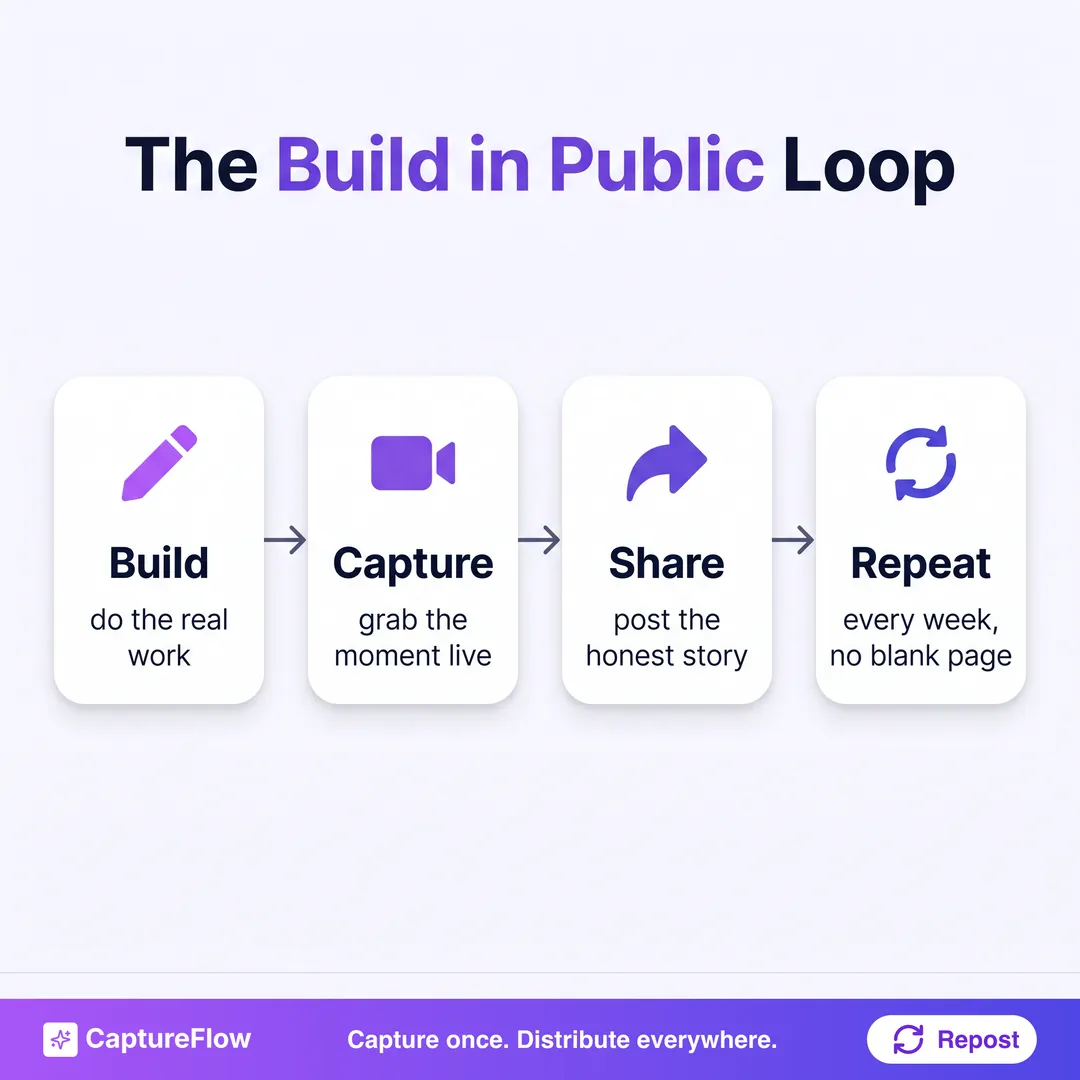 Capture the moment as it happens, and the blank page never shows up.
The fix is to stop treating content as a separate task and start capturing moments as they happen. Just closed a hard deal? Speak a 60-second voice note about it. Hit a metric? Screenshot it with one line of context. Made a tough call? Capture the reasoning while it is fresh. This is the core of capture-first content: the post starts from a real moment you already lived, not a blank document at the end of the week.
That is exactly what an AI content agent is built to turn into finished posts. CaptureFlow is an AI content agent that turns your expertise into weeks of on-brand content for every platform. You capture the moment in minutes, a voice note, a screenshot, a quick thought, and it reshapes it into a LinkedIn post, an X thread, a short video, and more, in your voice, ready to review. The building-in-public habit stops competing with the building. This is the same engine behind a founder content operating system, applied to the messy middle instead of the highlight reel.
The build-in-public ruleDo not wait for something finished and impressive to post. The in-progress, honest version is the one people trust, and it is the one you can actually sustain, because you are living it anyway.
The move
Building in public is the highest-trust content a founder can make, and the six categories above mean you will never truly run out of things to say. The only real risk is stopping, and you stop when it becomes a chore.
So make it not a chore. Capture the real moments as they happen, let them become native posts across your channels, and show up honestly and consistently. If the blank page is the thing standing between you and building in public, that is exactly what CaptureFlow is built to remove. You can see how it works, read how it fits your wider LinkedIn content strategy, or, if this is your whole approach, the build-in-public use case maps it to your goals.
Sources
- Edelman and LinkedIn, 2024 B2B Thought Leadership Impact Report (73 percent trust thought leadership over marketing).
Frequently asked questions
What should I post when building in public on LinkedIn?+
Post the real, in-progress story of your company: milestones and wins, real metrics and revenue, failures and the lessons from them, behind-the-scenes of how the work happens, the product decisions and tradeoffs you are weighing, and questions that ask your audience to shape what you build. The rule is share the process, not just the polished result.
Does building in public actually work for B2B?+
Yes, because B2B buyers trust a credible person far more than a brand account. Sharing your real decisions and numbers is thought leadership by another name, and decision-makers say they trust that kind of content more than marketing. The honest, specific post earns replies and inbound that a polished announcement never will.
How often should I post building-in-public content?+
Consistency matters more than frequency. One or two honest posts a week, sustained for months, beats a burst that fades. The way to keep it up is to capture moments as they happen, a voice note after a hard call, a screenshot of a metric, rather than sitting down to invent content from a blank page.
Chris is the founder and CEO of CaptureFlow, which he builds so founders can turn their expertise into content without hiring a team. After 10+ years building products and growing audiences from scratch, he writes about founder-led content, AI, and distribution from inside the problem he is solving: distributing consistent, on-brand content as a team of one.
Founder & CEO of CaptureFlow · 10+ years building products and audiences
One playbook a week from founders who actually create and distribute lots of content. No spam, unsubscribe anytime.
Keep reading

Build in Public: A Founder's Content Playbook
Building in public is the highest-trust content a founder can make. Here is the full strategy: what to share, where the line is, and a system to turn your week into content.
What Content Grows a LinkedIn Personal Brand Fastest
Not all LinkedIn content grows a personal brand at the same speed. Here are the content types that compound fastest, ranked, and the ones quietly wasting your time.

LinkedIn Personal Branding Tips That Actually Work
Most LinkedIn personal branding advice is fluff. These nine tips are the ones that actually move the needle, from fixing your profile to staying consistent.