Best Employee Advocacy Tools in 2026 (Honestly Ranked)
The best employee advocacy tools and software in 2026, honestly ranked by the job each does, plus the one thing every advocacy platform assumes you already have.


Every employee advocacy tool makes the same promise: turn your team into a distribution channel. Curated posts, one-click sharing, points and leaderboards, dashboards showing reach. It is a good promise, and the tools deliver on it.
They also quietly assume the hardest part is already solved: that you have a steady supply of content your employees actually want to post. Most companies do not. That is why so many advocacy programs launch with a shiny platform and stall by month two.
So this ranking does two things. It covers the best employee advocacy tools in 2026, honestly, by the job each one does. And it names the layer every one of them assumes you already have, which is usually the real reason the program is not working.
What is employee advocacy software?
Employee advocacy software is a platform that organizes and measures the distribution of content through employees' own social profiles: a curated feed to share from, gamification to drive participation, and analytics to track reach. It is the distribution engine of an advocacy program.
The reason to bother is well established. According to LinkedIn's own data, employees' combined networks are on average about ten times the size of a company's follower base, and in the 2026 Edelman Trust Barometer, "My Employer" is the most trusted institution at 78 percent. A person your buyer already follows carries trust a brand account never will. Advocacy software is how you operationalize that at scale.
But notice what the definition leaves out: creating the content. Every advocacy platform starts from "here is a post, go share it." Which is exactly where most programs break.
Why most employee advocacy programs stall
The software is rarely the reason a program fails. Three things upstream of the software are.
Supply. A platform gives you a feed to share from, but someone still has to fill that feed with content worth sharing. When the feed is a handful of dry company announcements, employees share once, get no response, and quietly stop. The distribution tool worked perfectly; there was just nothing good flowing through it.
Voice. The lazy fix for a thin feed is to hand everyone the same pre-approved caption. Ten identical posts across ten profiles get pattern-matched as spam by readers and the algorithm alike, and they waste the one advantage advocacy has: that it comes from a real person. Copy-paste advocacy is worse than none.
Friction. If contributing an original post takes thirty minutes and a blank page, people do it twice and quit. Consistency is a friction problem, not a willpower problem, and no leaderboard survives a workflow that feels like homework. Whether removing that friction even needs a platform, or just letting people post on their own, is its own decision, weighed in employee advocacy tools vs letting employees post on their own.
None of these three is a distribution problem, which is why buying a better distribution tool does not fix them. They are content problems, which is the whole reason the next distinction matters.
Advocacy platform vs content layer: the distinction that matters
There are really two different tools hiding inside "employee advocacy," and confusing them is why programs fail.
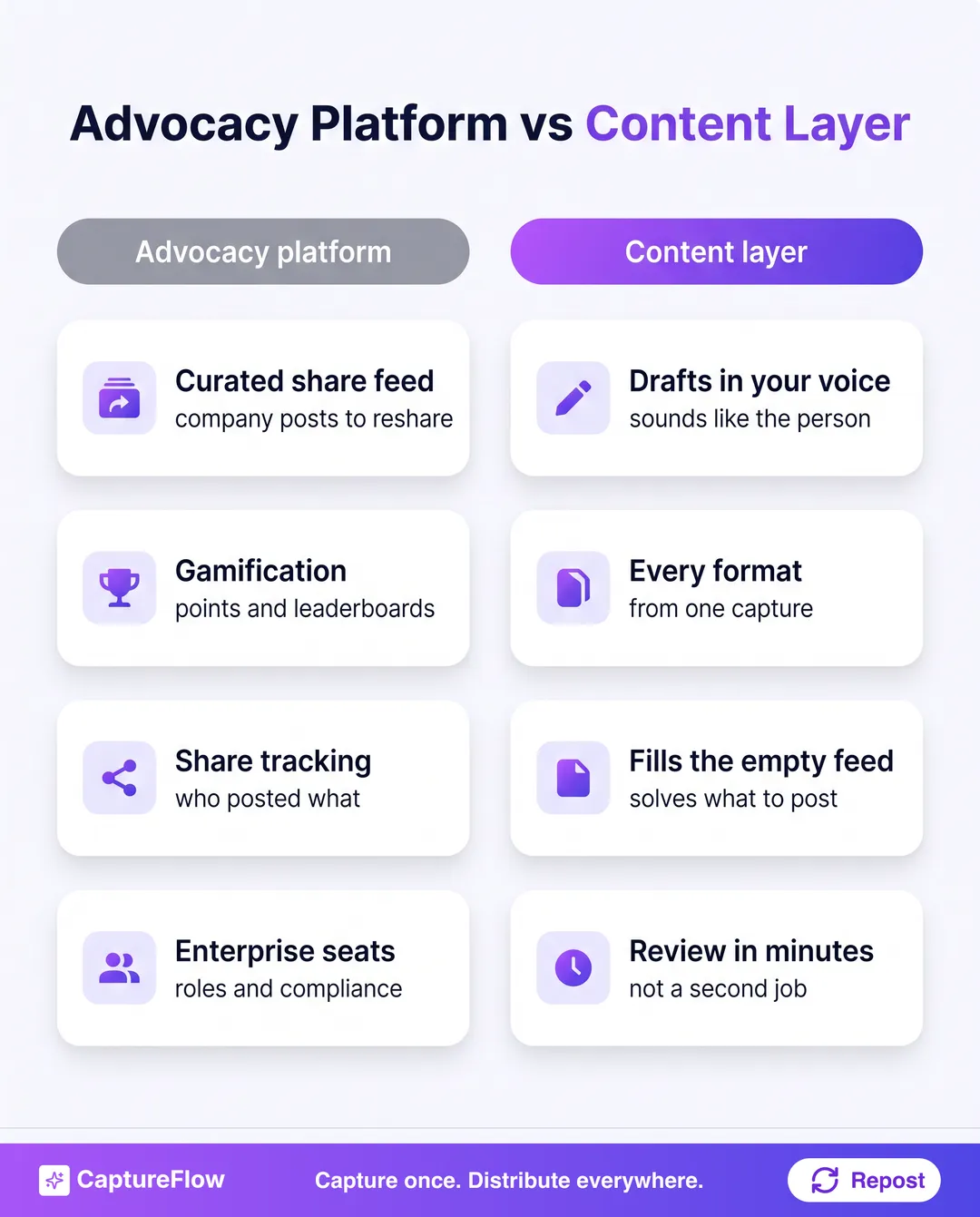 Two different jobs. Most teams buy the left and wonder why the feed is empty.
An advocacy platform handles distribution: it curates what to share, nudges people to share it, gamifies participation, and reports the reach. A content layer handles supply: it produces on-brand posts in each person's own voice so there is something worth sharing in the first place.
The platforms below are excellent at the first job. The mistake is assuming they do the second.
The best employee advocacy tools in 2026 at a glance
| Tool | Best for | Type | Pricing |
|---|---|---|---|
| EveryoneSocial | All-around advocacy at scale | Advocacy platform | Custom / enterprise |
| Sociabble | Enterprise reach and gamification | Advocacy platform | Custom / enterprise |
| DSMN8 | A ready-made content library | Advocacy platform | Custom / enterprise |
| Oktopost | B2B analytics and attribution | Advocacy + social | Custom / enterprise |
| GaggleAMP | Structured engagement activities | Advocacy platform | Paid tiers, per seat |
| PostBeyond | Curated sharing at enterprise scale | Advocacy platform | Custom / enterprise |
| Hootsuite Amplify | Teams already on Hootsuite | Advocacy add-on | Add-on to Hootsuite |
| Haiilo | Internal comms plus advocacy | Comms + advocacy | Custom / enterprise |
| Supergrow | LinkedIn-only content creation | Content tool | Self-serve monthly |
| CaptureFlow | The content employees actually post | Content layer | Free to start |
1. EveryoneSocial: best all-around advocacy platform
 EveryoneSocial. Source: everyonesocial.com
EveryoneSocial is the tool most people picture when they say "employee advocacy." It gives employees a clean feed of shareable content, makes posting to LinkedIn and other channels fast, and reports reach and engagement back to the program owner.
Credit where it is due: for a company that already produces good content and just needs a reliable way to get it into employees' networks, EveryoneSocial is hard to fault. It is polished, it scales, and its analytics are genuinely useful for proving the program's value.
Its limit is the one shared by the whole category: it distributes content, it does not create it. If your feed of shareable posts is thin or off-voice, a great distribution tool just distributes your silence faster. Teams that succeed with EveryoneSocial almost always have a content engine feeding it; teams that fail usually bought the distribution and skipped the supply.
- Best for: established programs with a steady content supply.
- Type: advocacy platform (distribution and analytics).
- Pricing: custom, enterprise-oriented.
2. Sociabble: best for enterprise reach and gamification
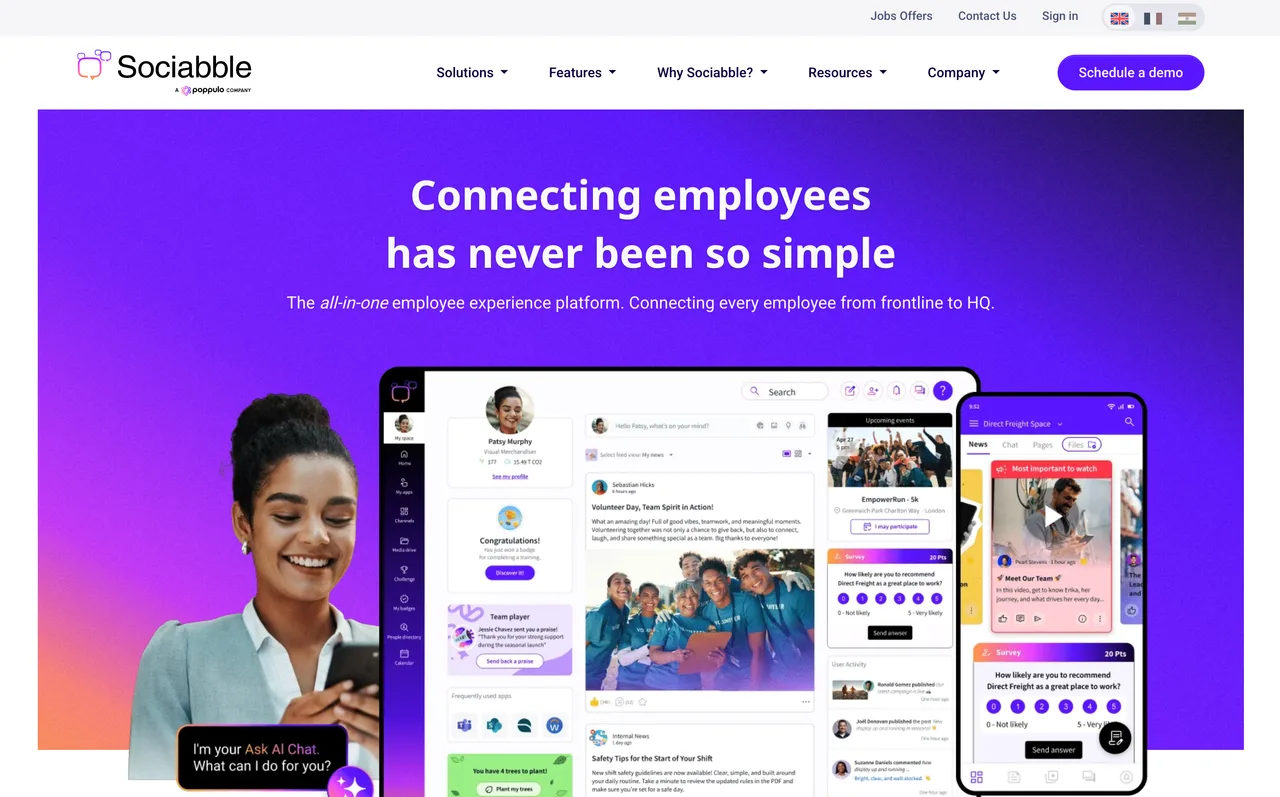 Sociabble. Source: sociabble.com
Sociabble leans enterprise: multi-market rollouts, strong gamification, and a polished experience for large, distributed workforces. If you are activating thousands of employees across regions, its structure and leaderboards are built for exactly that scale.
For a large enterprise that wants participation engineered through points, challenges, and internal competition, Sociabble is one of the most complete options here. The gamification is real and it moves participation numbers.
The caveat is the same, plus one more: gamified sharing can drift toward volume over authenticity. Points reward posting; they do not guarantee the post sounds like a human. Distribution and gamification are solved. The content still has to be worth the share. In practice, the enterprises that get the most from Sociabble treat the leaderboard as a nudge on top of genuinely good raw material, not as a substitute for it.
- Best for: large, multi-region enterprises.
- Type: advocacy platform with heavy gamification.
- Pricing: custom, enterprise.
3. DSMN8: best for a ready-made content library
 DSMN8. Source: dsmn8.com
DSMN8 brands itself as an "employee influencer platform," and its strength is exactly that framing: a well-stocked, centralized library of approved content employees can pull from, with leaderboards and analytics layered on top.
For a program that wants a tidy library of ready-to-share content plus gamification to drive participation, DSMN8 is a strong, focused option. It makes the "what do I even share" question easy to answer, which removes a real barrier.
Its limit is the category's: a library of company content to reshare is still company content. It solves finding something to share, not making that something sound like the employee who shares it.
- Best for: teams that want a curated content library with gamification.
- Type: advocacy platform.
- Pricing: custom, enterprise-oriented.
4. Oktopost: best for B2B analytics and attribution
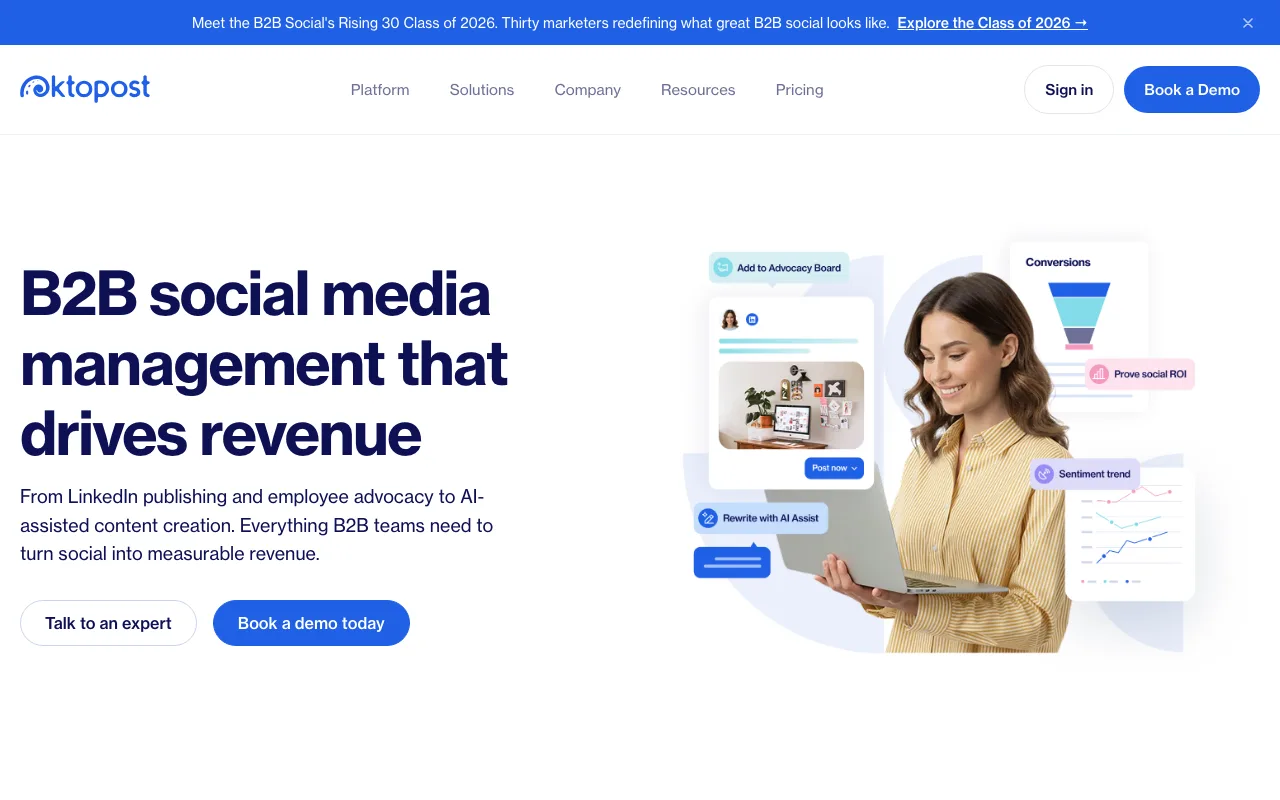 Oktopost. Source: oktopost.com
Oktopost is a B2B social media management suite with employee advocacy built in, and its real differentiator is data: deep analytics and attribution that tie social activity back to pipeline, plus integrations with marketing automation and CRM.
If you are a data-driven B2B marketing team that needs to prove social's impact on revenue, Oktopost's analytics are the most serious on this list. Advocacy is one module inside a broader B2B social platform, which suits teams that want everything in one place.
The trade-off is weight: it is a heavier, marketing-ops-oriented platform, and like the rest, it manages distribution and measurement rather than creating the posts your employees actually publish.
- Best for: B2B teams that need social-to-pipeline attribution.
- Type: B2B social management plus advocacy.
- Pricing: custom, enterprise.
5. GaggleAMP: best for structured engagement
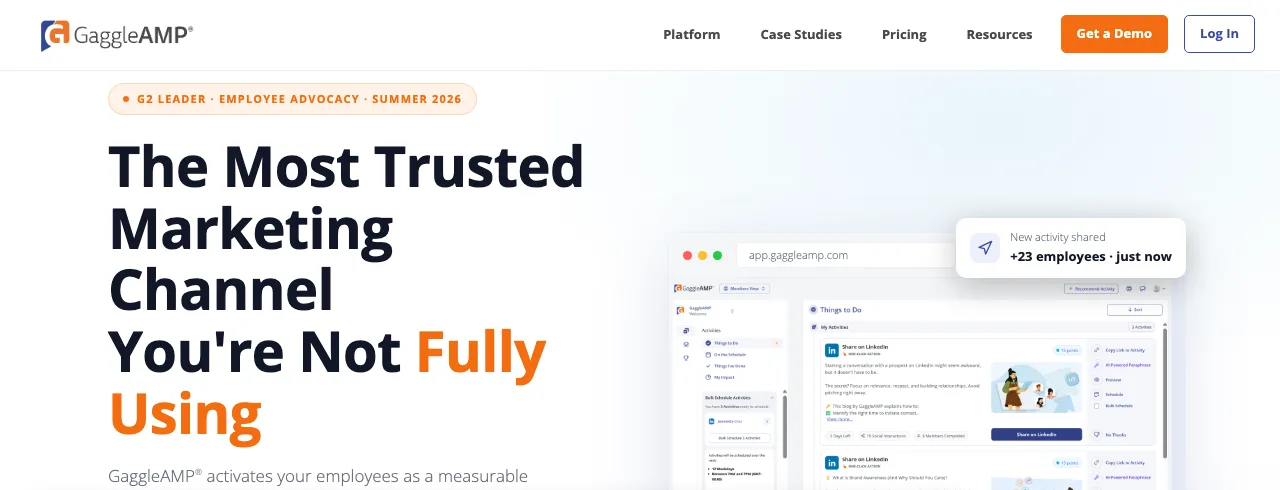 GaggleAMP. Source: gaggleamp.com
GaggleAMP takes a more directed approach: managers assign specific engagement "activities" (share this, comment on that, react here), which makes participation concrete rather than open-ended. For teams that struggle with "I do not know what to post," that structure helps.
If your challenge is getting people to do something specific and measurable, GaggleAMP's activity model is the most prescriptive option on this list. It turns a vague ask into a checklist.
But prescriptive engagement has a ceiling: assigned comments and reshares are still not the employee's own original thinking, which is where the real trust lives. It organizes participation well; it does not manufacture voice. The activities keep a program moving, but a feed of assigned reactions rarely produces the standout original post that actually drives a lead.
- Best for: teams that want structured, assignable engagement.
- Type: advocacy platform (activity-based).
- Pricing: paid tiers, roughly per seat.
6. PostBeyond: best for curated sharing at scale
 PostBeyond. Source: postbeyond.com
PostBeyond focuses on the core advocacy loop done cleanly: a curated feed of approved content, easy one-click sharing, and analytics, built to activate a large employee base without friction.
For an enterprise that wants a straightforward, well-run curated-sharing program without a lot of extra surface area, PostBeyond is a solid, focused choice. It does the fundamental job reliably, which is worth more than a long feature list nobody uses.
Its focus is also its ceiling: it is built around resharing curated content, so the originality and personal voice that make advocacy actually land still have to come from somewhere upstream.
- Best for: enterprises wanting clean, curated resharing at scale.
- Type: advocacy platform.
- Pricing: custom, enterprise.
7. Hootsuite Amplify: best if you already use Hootsuite
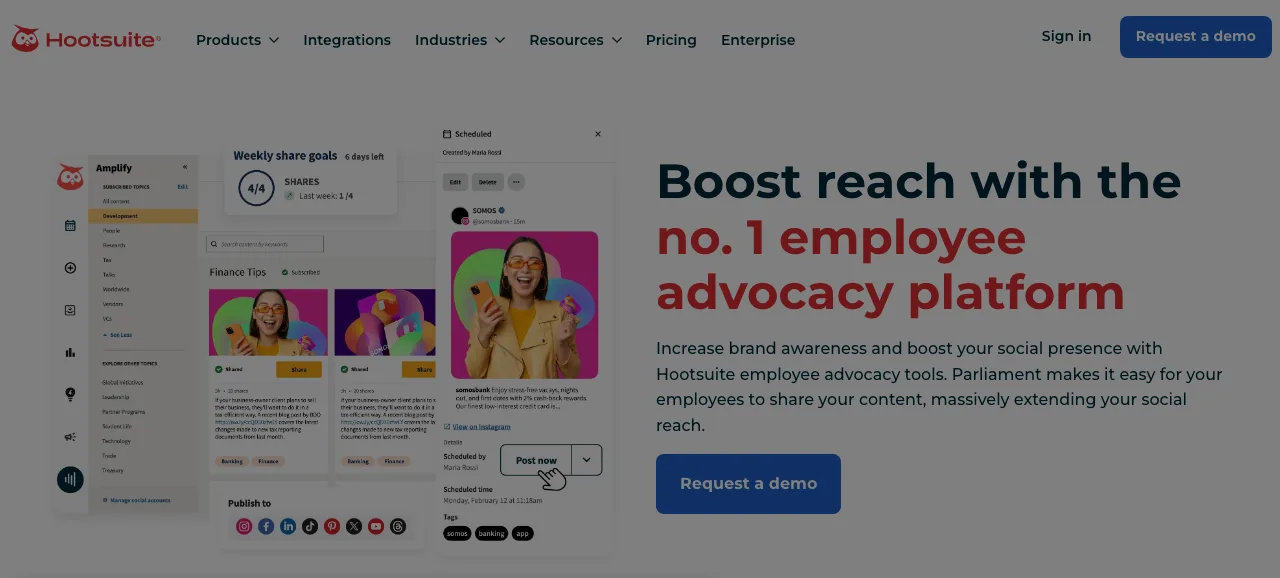 Hootsuite Amplify. Source: hootsuite.com
Amplify is Hootsuite's employee advocacy add-on. Its main advantage is convenience: if your social team already lives in Hootsuite, adding an advocacy layer without buying a separate platform is a low-friction win.
For an existing Hootsuite shop, Amplify is the path of least resistance. You get a curated share feed inside a tool your team already knows.
As a bolt-on rather than a purpose-built platform, it is lighter on the deep gamification and program tooling of the dedicated players, and like all of them, it assumes the content is ready to go. For a team scaling a serious advocacy motion, a dedicated platform will outgrow it; for a team dipping a toe in, the convenience is worth a lot.
- Best for: teams already standardized on Hootsuite.
- Type: advocacy add-on. See how a content-first approach compares in the CaptureFlow vs Hootsuite breakdown.
- Pricing: add-on to a Hootsuite plan.
8. Haiilo: best for internal comms plus advocacy
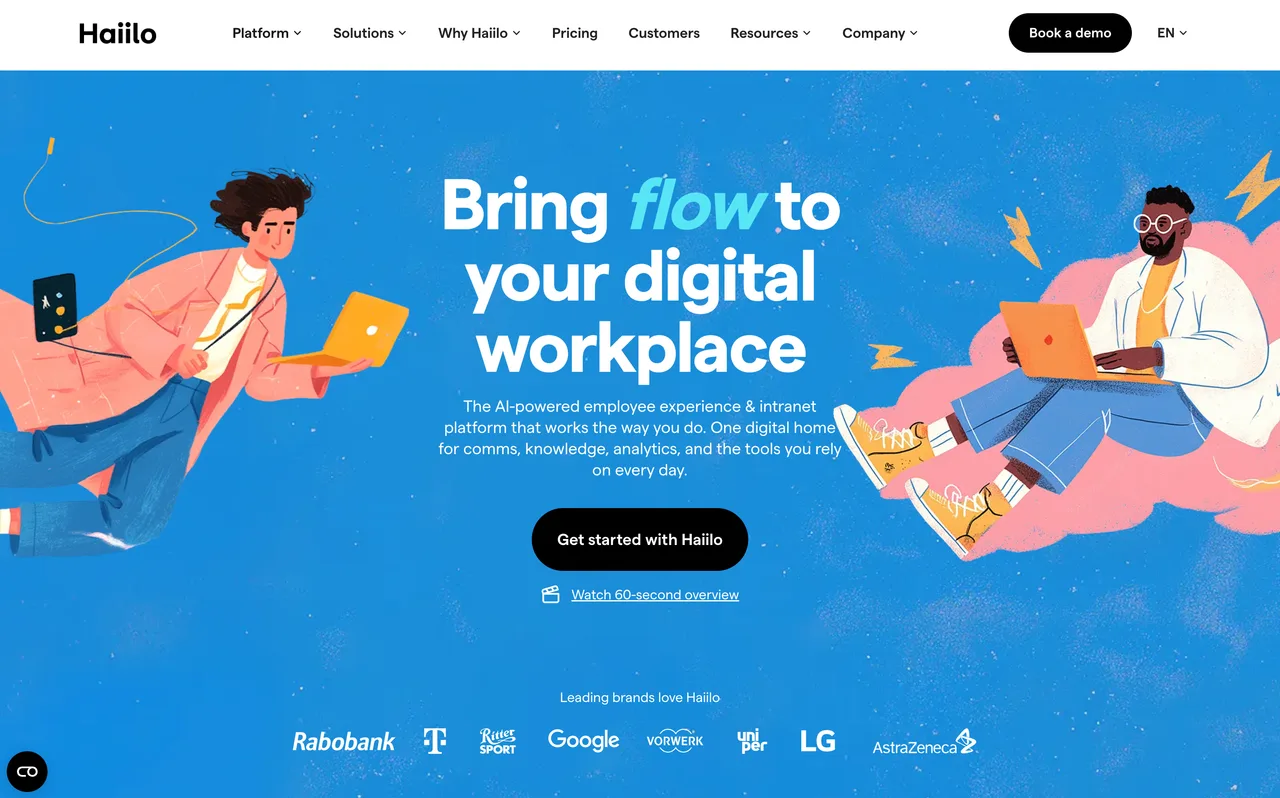 Haiilo. Source: haiilo.com
Haiilo sits at the intersection of internal communications and external advocacy, which suits organizations that want one platform for reaching employees internally and activating them externally.
If your program lives inside a comms function and you want the internal newsletter and the advocacy feed under one roof, Haiilo's combined approach is a sensible fit. Consolidation has real value for comms teams.
The trade-off is focus: a platform doing two jobs spreads itself across both, and the external content still needs to be created somewhere before it can be distributed. If your priority is external reach rather than internal announcements, a dedicated advocacy platform paired with a content layer will usually feel sharper than a combined suite.
- Best for: comms-led programs wanting internal plus external in one place.
- Type: internal comms plus advocacy.
- Pricing: custom, enterprise.
9. Supergrow: best for LinkedIn-only content creation
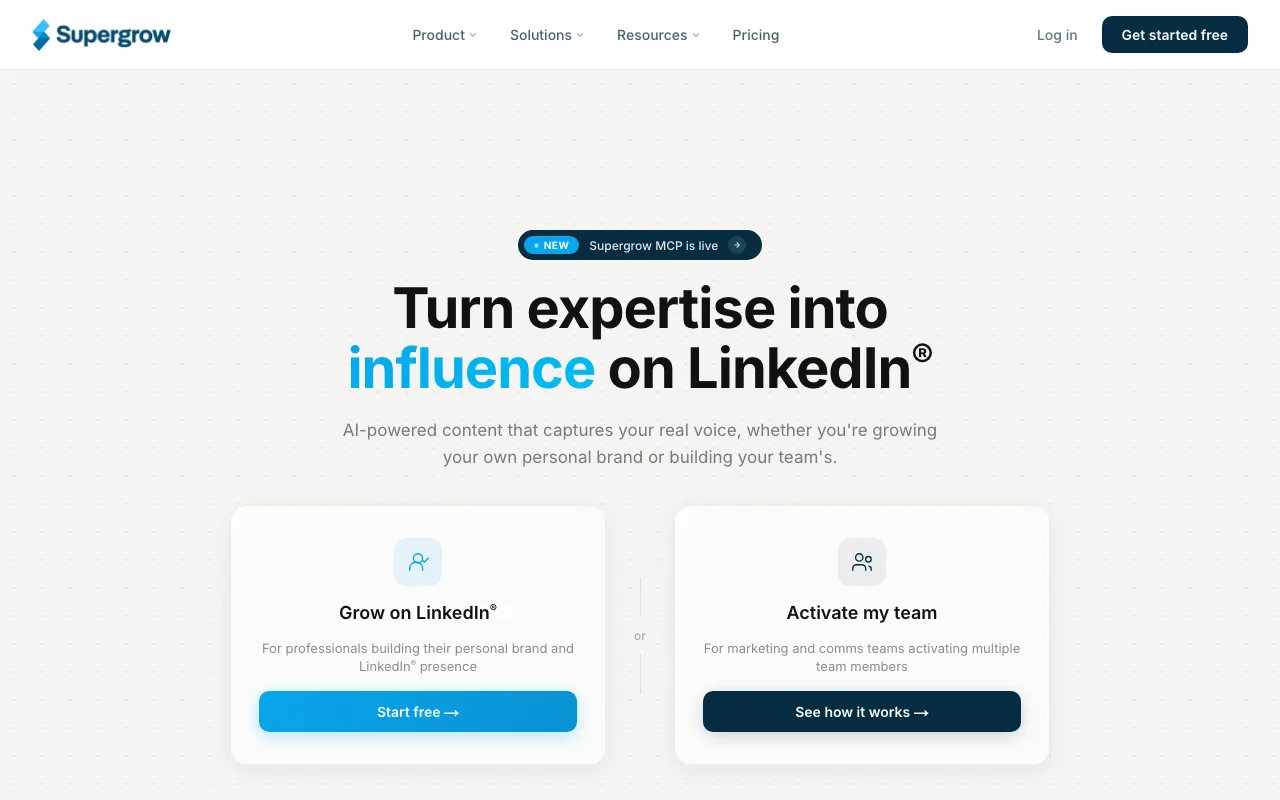 Supergrow. Source: supergrow.ai
Supergrow is a different animal from the platforms above: it is not a distribution platform at all, but an AI tool for writing LinkedIn content. In that sense it sits on the content side of the line, which is closer to what employees actually struggle with than another share feed.
Credit where it is due: for an individual who lives entirely on LinkedIn and wants help drafting posts, Supergrow is a capable, affordable LinkedIn writing tool. It takes a real swing at the blank page, on one platform.
The limit is scope. It is LinkedIn-only and built around drafting individual posts, so it does not turn one capture into native content across every channel, and it is designed for a solo creator rather than a whole team's distinct voices. If LinkedIn is your entire world, it is worth a look. If your people need to show up across platforms in their own voice, it is a narrower slice of the content layer than a full content agent.
- Best for: solo LinkedIn creators who want drafting help.
- Type: LinkedIn content tool.
- Pricing: self-serve monthly plans.
10. CaptureFlow: best for the content employees actually post
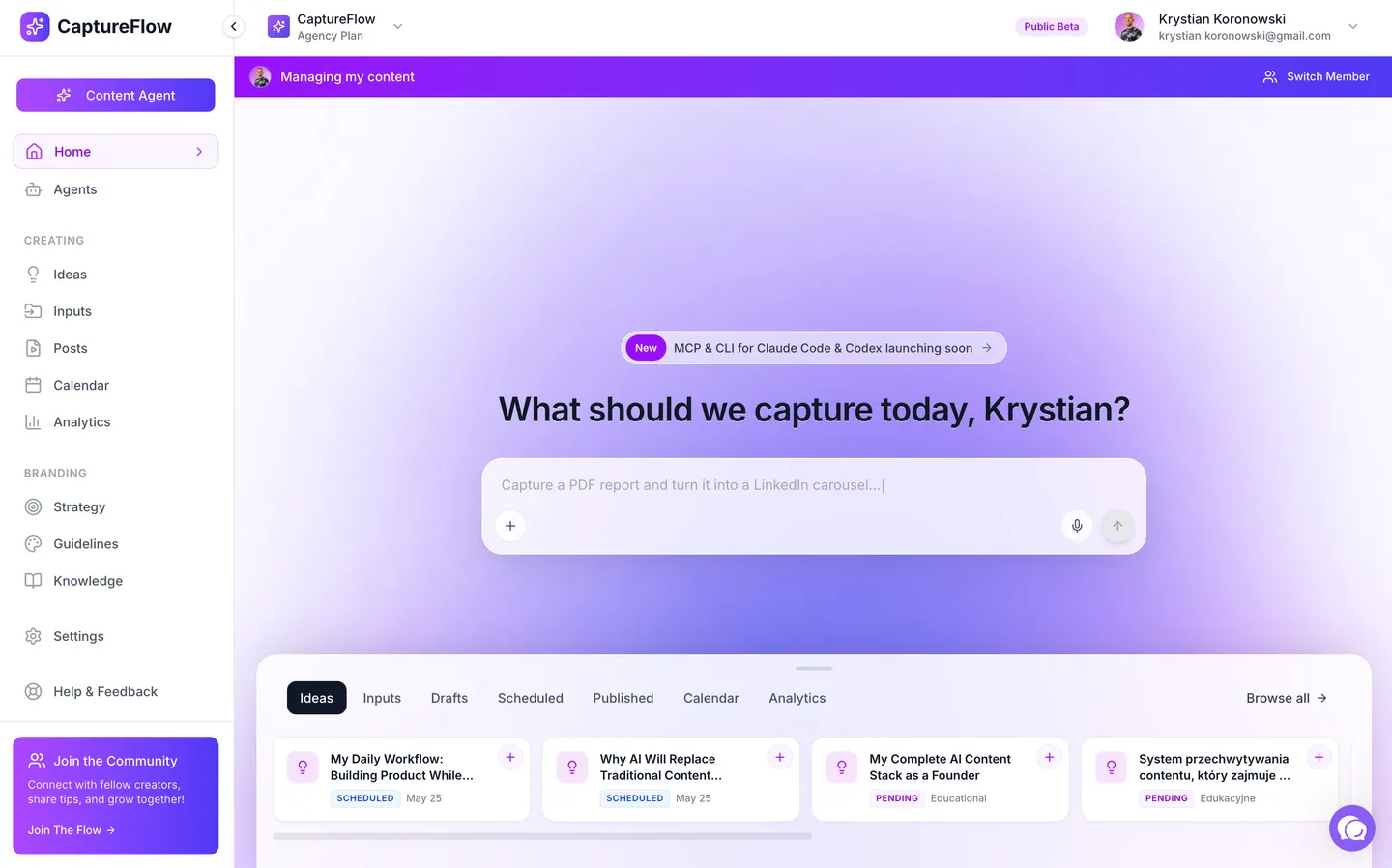 CaptureFlow. Source: captureflow.ai
Here is the honest part. CaptureFlow is not an employee advocacy platform. It has no leaderboard, no curated reshare feed, no gamification. If distribution and gamification are your bottleneck, buy one of the tools above.
CaptureFlow solves the problem those tools assume away: supply. CaptureFlow is an AI content agent that turns your expertise into weeks of on-brand content for every platform. An employee captures one idea, a lesson, a customer story, a strong opinion, and it drafts on-brand posts, carousels, and short video in that person's own voice, ready to review in minutes. It fixes the empty feed, the generic-corporate-copy problem, and the thirty-minute blank page that kills participation.
That is why it belongs on this list, not as the top advocacy platform, but as the layer that makes any advocacy platform actually work. The best programs run both: a content layer to produce, a platform to distribute. The mechanics of building that program are in our employee advocacy program playbook, and the content-type it produces is covered in employee-generated content: the B2B playbook.
- Best for: solving the "our employees have nothing good to post" problem.
- Type: content layer (creation, not distribution).
- Pricing: free to start. See how CaptureFlow compares to single-purpose tools.
How to choose the right tool for you
Do not start from the brand. Start from the stage of your program that is actually stuck.
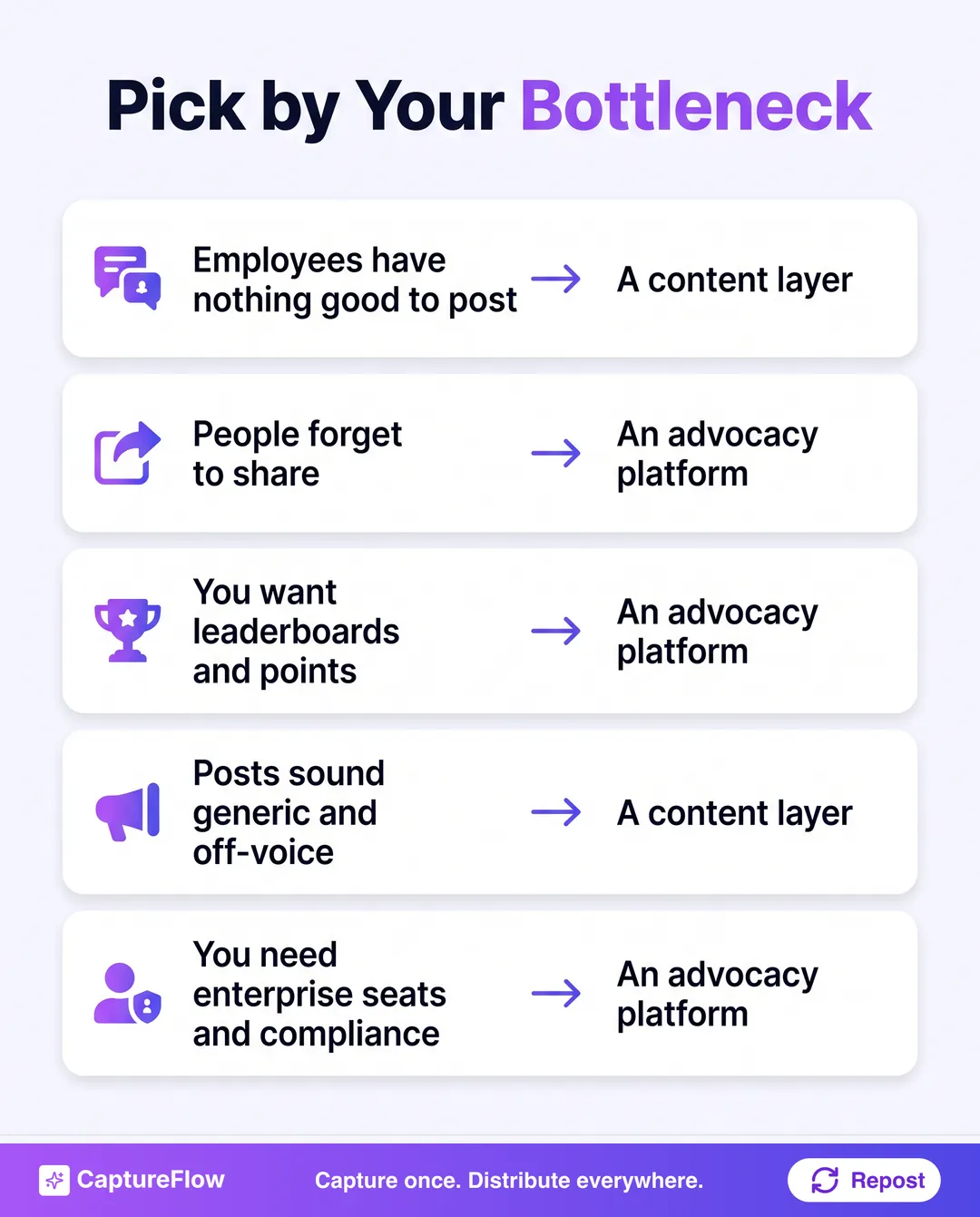 Buy for the bottleneck you actually have, not the one the demo is selling against.
The honest test: if your employees are willing but have nothing on-brand to post, no advocacy platform fixes that, and you need a content layer. If they have plenty to post but never remember to, or you need gamification, roles, and compliance at scale, that is exactly what an advocacy platform is for.
Sequence matters too. If you are starting from zero, solving supply first tends to pay off faster: a small group of willing people creating genuinely good posts will build momentum even without a formal platform, whereas a platform with an empty feed builds nothing. Once the content is flowing and you want to scale participation, roles, and reporting across a large workforce, that is the moment a dedicated advocacy platform earns its contract. Many teams get this backwards, buying the enterprise platform first and then discovering they have automated the distribution of content that does not exist yet. If you are weighing the decision head-on, we lay out the full trade-offs in employee advocacy software vs building in-house.
Most mature programs need both, which is why the landscape sorts cleanly into two layers.
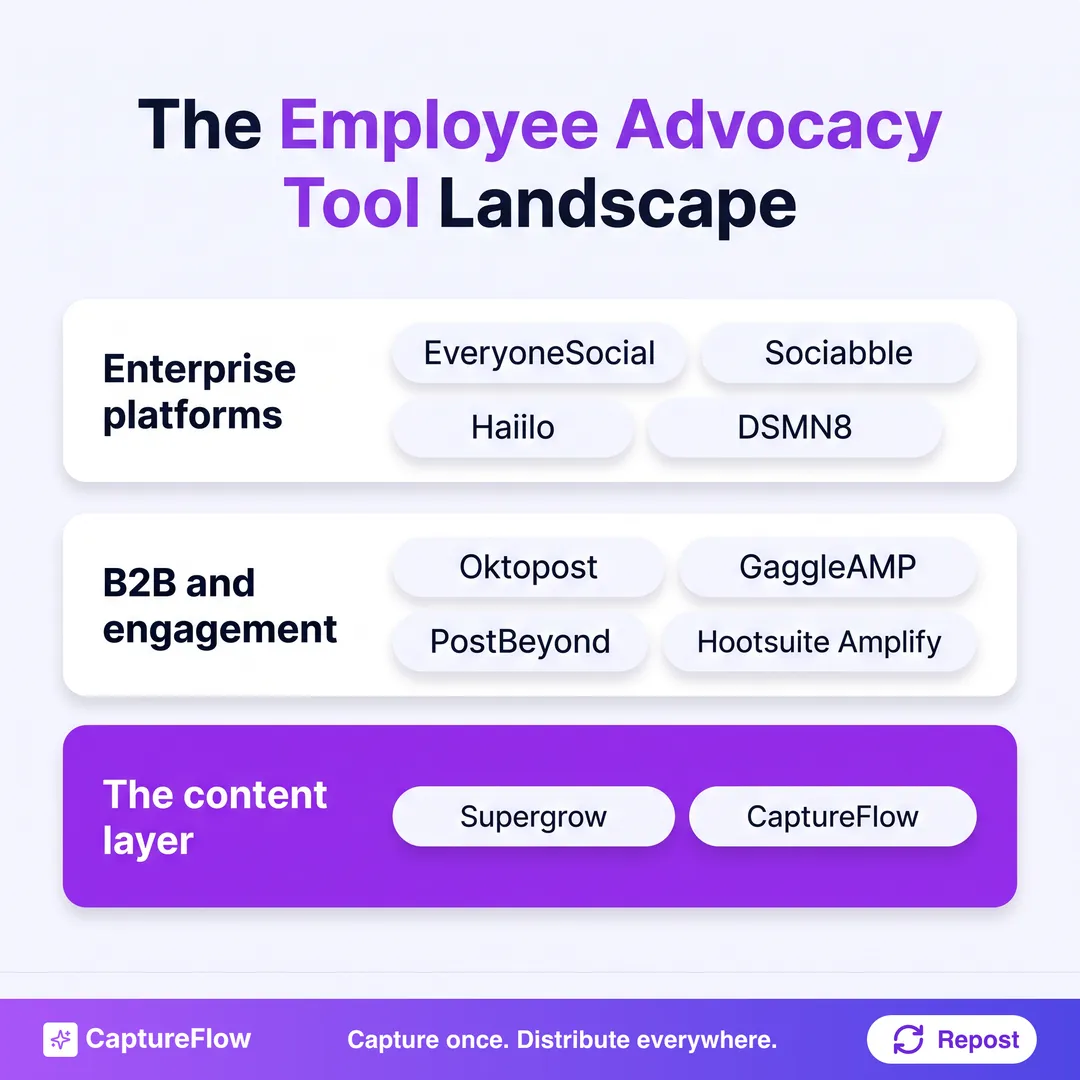 Two jobs, one stack: a platform distributes and measures, a content layer produces what there is to share.
Common mistakes when choosing advocacy software
A few buying mistakes show up again and again, and they are expensive because these platforms are usually annual enterprise contracts.
- Buying distribution to fix a supply problem. If your feed is thin, a better platform just distributes the shortfall. Solve content first, then scale the distribution.
- Chasing gamification as the goal. Points and leaderboards drive activity, not authenticity. A program measured only on posts published will optimize for volume and lose the trust it was built to earn.
- Mandating participation through the tool. Software makes it easy to require posts. Forced advocacy reads as forced, and the posts show it. Willingness is the prerequisite no feature replaces.
- Ignoring voice at scale. The moment ten employees post the identical caption, you have rebuilt the brand account with extra steps. Whatever you buy, protect each person's voice.
- Measuring reach instead of outcomes. Impressions flatter a dashboard. Clicks, conversations, and pipeline are what justify the renewal.
Get those five right and almost any platform on this list will serve you. Get them wrong and the best software on the market will still produce a quiet, abandoned feed.
The honest final take
If you came here for the best employee advocacy platform, the answer is real: EveryoneSocial and Sociabble lead the full-featured category, Oktopost wins on B2B analytics, DSMN8 and PostBeyond do curated sharing cleanly, GaggleAMP owns structured engagement, Hootsuite Amplify is the easy add-on if you already run Hootsuite, and Haiilo fits comms-led teams. Any of them will handle distribution well, and I would rather you pick the right platform than the loudest one. On the content side, Supergrow helps solo LinkedIn creators draft, though it stops at one platform.
But most programs that stall do not have a distribution problem. They have a supply problem, and no leaderboard fixes an empty feed. Buy the platform that fits your scale, then solve the harder half: give every employee on-brand content they can make their own in five minutes.
The advocacy tool ruleAn advocacy platform makes sharing easy. It cannot make the content worth sharing. That is a different tool, and it is the one most programs are actually missing.
If the reason your advocacy program is quiet is that people have nothing good to post, that is exactly what CaptureFlow is built to fix. You can see how it works, read how it maps to B2B leaders, or start with the employee advocacy program playbook to build the whole system around it.
Sources
- LinkedIn Marketing Blog, How to Increase Employee Social Sharing for More Organic Reach (employee networks ~10x the company audience).
- Edelman, 2026 Edelman Trust Barometer ("My Employer" the most trusted institution at 78 percent).
Frequently asked questions
What is the best employee advocacy tool in 2026?+
It depends on your bottleneck. For a full-featured advocacy platform, EveryoneSocial and Sociabble lead, with GaggleAMP strong on structured engagement and Hootsuite Amplify convenient if you already use Hootsuite. But if your real problem is that employees have nothing on-brand to post, the tool you need is a content layer like CaptureFlow, not another distribution platform.
What does employee advocacy software actually do?+
It manages the distribution side of an advocacy program: a curated feed of company content for employees to reshare, gamification like points and leaderboards to drive participation, share tracking to see who posted what, and enterprise controls for roles and compliance. It assumes the content already exists and is worth sharing.
Why do employee advocacy programs fail even with a tool?+
Because the tool solves distribution, not supply. Most programs die when employees are handed a feed of dry corporate posts to reshare, which reads as spam and earns no trust. The fix is upstream: give people on-brand content they can make their own in their own voice, which is a content problem, not a distribution one.
Chris is the founder and CEO of CaptureFlow, which he builds so founders can turn their expertise into content without hiring a team. After 10+ years building products and growing audiences from scratch, he writes about founder-led content, AI, and distribution from inside the problem he is solving: distributing consistent, on-brand content as a team of one.
Founder & CEO of CaptureFlow · 10+ years building products and audiences
One playbook a week from founders who actually create and distribute lots of content. No spam, unsubscribe anytime.
Keep reading

What Is Employee Advocacy? The Complete Guide
Your employees' networks are bigger and more trusted than your company page. Employee advocacy is how you put that to work. Here is the complete guide.

Employee Generated Content: The B2B Playbook
Your buyers trust your employees more than your brand. Employee-generated content is how you put that trust to work. Here is the B2B playbook.

Employee Advocacy Content Ideas: What Your Team Should Post on LinkedIn
Your team is willing to post, they just do not know what to say. Here is the content employees should share on LinkedIn, and how to make it take 5 minutes.